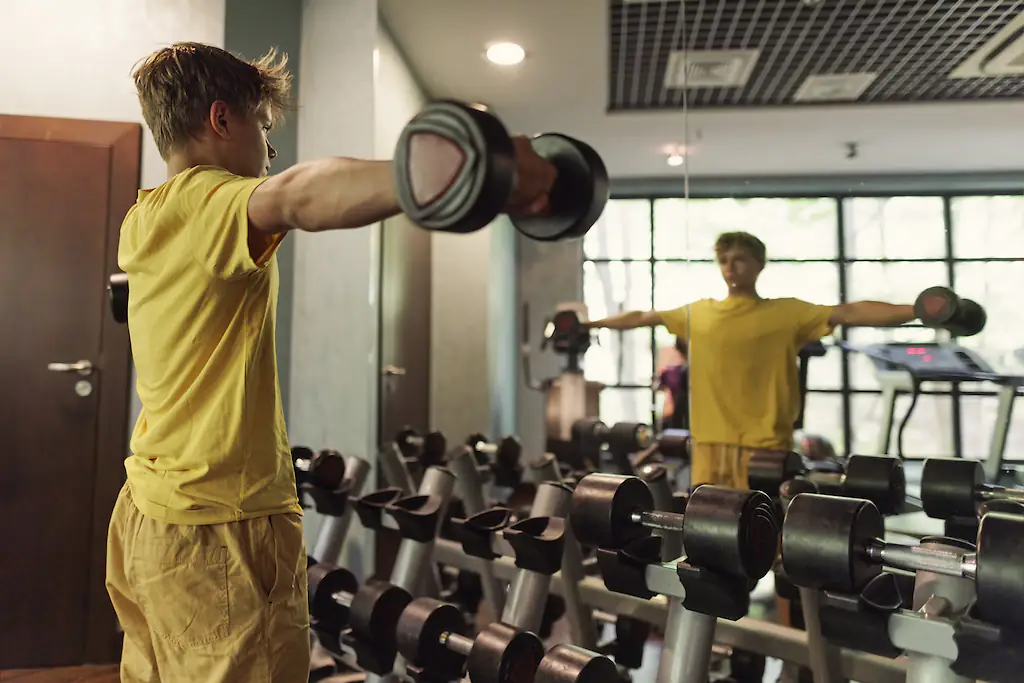
In a world increasingly driven by social media and idealized body images, a growing number of young men are developing a condition known as "bigorexia".
With the number of cases on the rise, experts are speaking out about the signs and dangers of the condition, and how parents and guardians of young men and boys can be on the lookout and support loved ones.
'Bigorexia' is impacting more and more young people. Credit: Imgorthand / Getty (Stock Photo)
This psychological disorder - classified as a form of body dysmorphic disorder (BDD) - is also known as muscle dysmorphia, and causes individuals to believe they are too small or not muscular enough... even when they may already possess an impressive physique.
Understanding Bigorexia
Bigorexia - which is also known as "Adonis complex", "reverse anorexia", and "megarexia" - is often marked by compulsive exercise, extreme dieting, and in some cases, the use of performance-enhancing substances.
Despite its prevalence, bigorexia remains underdiagnosed, especially among young men.
According to clinical psychologist Amy Gooding from the Eating Recovery Center, those suffering from the disorder often have a distorted perception of their bodies, believing they are not muscular enough.
“This belief and subsequent preoccupation can lead to unhealthy behaviors, including obsessive exercise, and may lead to changing one’s eating to be as lean as possible,” Gooding explained to HuffPost.
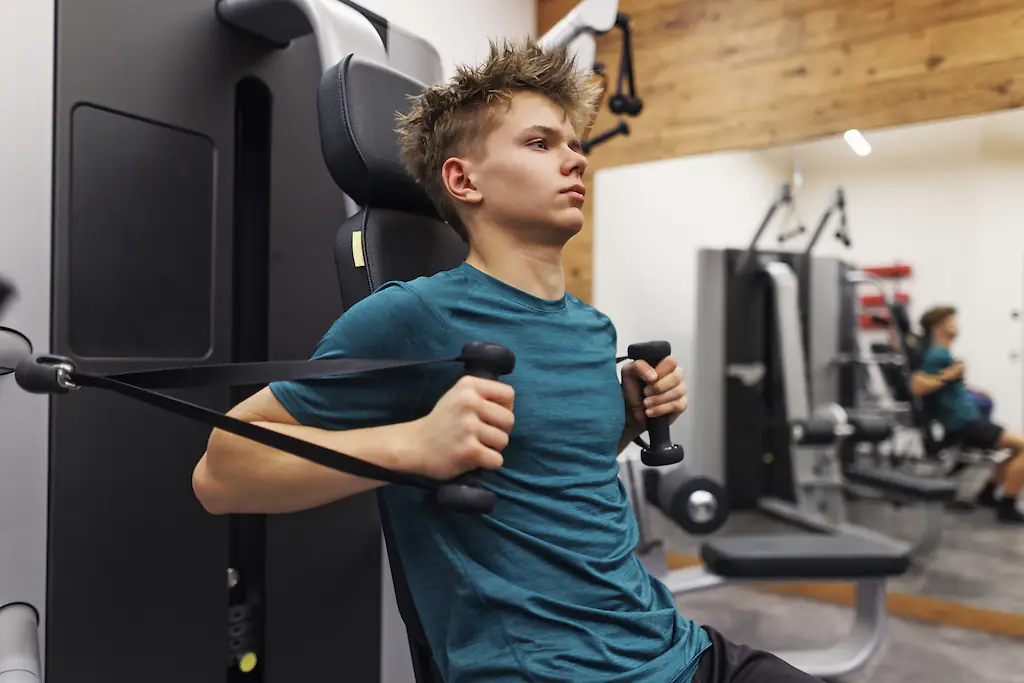
The condition is more common in boys than girls, but anybody is at risk. Credit: Imgorthand / Getty (Stock photo)
The National Alliance for Eating Disorders describes some of the key behaviors associated with the condition: "Compulsive and excessive exercise, especially workouts that build muscle, such as lifting weights.
"Restricting calories or categories of food. Excessive consumption of protein. Preoccupations with body shape, body size, eating, and disordered relationship to exercise and food."
A Growing Epidemic
While eating disorders like anorexia and bulimia have long been recognized, muscle dysmorphia has only recently gained attention.
A 2019 study cited by HuffPost found that 22% of adolescent boys engaged in “muscularity-oriented disordered eating behaviors,” such as excessive dietary restrictions, supplement use, and even steroid consumption in an effort to bulk up.
Experts warn that bigorexia is a particularly insidious disorder because many of its behaviors — such as extreme weightlifting and high-protein diets — are normalized in fitness culture.
“Muscle dysmorphia can be overlooked for several reasons — one being that it can lead to behaviors often encouraged in the weight room,” Gooding said.
Experts have shared the key signs to look out for. Credit: Westend61 / Getty (Stock Photo)
How Social Media Fuels Body Dysmorphia
Social media platforms have amplified unrealistic body expectations, making it easier for young men to compare themselves to influencers, bodybuilders, and celebrities who present an idealized version of masculinity.
According to NextStep Solutions, the trend is directly linked to social media consumption, as they state: "With the proliferation of social media platforms such as Instagram, TikTok, and YouTube, amateur bodybuilders are more popular than ever. Glorifying high protein diets and #gains, this new breed of influencers is perpetuating a whole new standard of male aesthetic."
“Studies indicate that standards of beauty are overwhelmingly ingested from popular culture. And today’s popular culture has been supersized," NextStep Solutions author Darice Warren writes. "Today, paragons of male strength are more massive than they have ever been before.”
Dr. Jason Nagata, a pediatrician specializing in eating disorders, agrees.
“Not only are young people consuming body ideals from the media, but they feel pressure to produce content and display their own bodies on social media,” Nagata told HuffPost.
He noted that influencers and celebrities often make a living off their physique but have access to trainers, chefs, performance-enhancing substances, and editing tools that give them an unrealistic and often unattainable look.
“Most 15-year-old kids don’t think about these facts when they see images of actors like Hugh Jackman looking ripped. Instead, they might develop dissatisfaction with their own bodies,” said psychology professor Joseph J. Trunzo of Bryant University.
Who Is at Risk?
Although bigorexia is most commonly seen in men, anyone can develop the disorder.
Research suggests that individuals with a family history of mental health conditions, low self-esteem, or perfectionist tendencies are at higher risk.
Young women are also at risk. Credit: South_agency / Getty (Stock Photo)
Competitive athletes, bodybuilders, and people who lift weights to change their appearance are particularly vulnerable, according to Nagata.
“Athletes who lift weights to change the appearance of their bodies are at higher risk than those who focused on improving performance,” he said.
Bullying and trauma can also contribute to the development of muscle dysmorphia, especially if an individual has been mocked for their body in the past.
Recognizing the Warning Signs
Experts urge parents and peers to be aware of red flags that indicate a person may be struggling with bigorexia. Some of the most common warning signs include:
Obsession with exercise—skipping social events or responsibilities to work out
Extreme dietary changes—rigid eating habits, excessive protein consumption, or avoiding entire food groups
Excessive mirror-checking—frequent body checking and dissatisfaction despite visible muscle growth
Use of steroids or supplements—engaging in unsafe practices to increase muscle mass
Social withdrawal—isolation from family and friends due to preoccupation with appearance
Nagata warned that these behaviors can “worsen quality of life and impair social, school, or daily functioning.”
More and more young people are consuming whey protein powder in their diets.Credit: Jordi Janau / Getty
Regarding dietary habits, a recent study by the University of Toronto, cited by Consumer Affairs, revealed that 55–80% of adolescent boys and men and 33–50% of adolescent girls and women regularly consume whey protein powders within their diets.
What Can Be Done?
Because bigorexia is a mental health disorder, professional treatment is often necessary.
Therapy — particularly cognitive-behavioral therapy (CBT) — can help individuals develop a healthier self-image and reduce compulsive behaviors.
For parents, experts recommend the following:
Limit social media exposure—but also talk to children about the unrealistic standards they see online
Encourage body diversity—highlight that people come in all shapes and sizes
Challenge unhealthy messaging—call out harmful fitness trends and dieting fads
Promote overall health—focus on strength, energy, and well-being rather than appearance
Therapist Cherie Miller encourages parents to contextualize celebrity transformations for their kids.
Miller tell HuffPost: “I’ve been having conversations with my 9-year-old son like, ‘Let’s read what Hugh Jackman said about what he had to do to transform into Wolverine and look like this.’ It’s a chance to say, ‘This isn’t normal, this isn’t realistic, and this is not something that we should try to attain.’”
If someone is already struggling with bigorexia, early intervention is key.
“Boys with muscle dysmorphia or eating disorders should seek professional help,” Nagata emphasized. “The earlier this is dealt with, the better. Left unchecked, the consequences can be life-altering.”
The Bottom Line
Muscle dysmorphia, once an overlooked disorder, is becoming increasingly common among young men, driven by social media, fitness culture, and unrealistic beauty standards.
While extreme workouts and diets may seem harmless, they can quickly spiral into obsessive and unhealthy behaviors.
Recognizing bigorexia as a serious mental health condition is crucial.
The National Eating Disorders Association stresses that receiving "a diagnosis is only the first step towards recovery from an eating disorder" - so if you or somebody you know is concerned about bigorexia, speak to your doctor or a medical professional.
With the right awareness, conversations, and professional help, individuals can break free from the cycle of self-doubt and obsessive muscle-building — and instead, focus on genuine strength, well-being, and self-acceptance.
Featured image credit: Imgorthand / Getty (Stock photo)










.webp_vBqgAR?tr=cr-242.0.1293.1051,f-webp,q-70,w-100)